
An enquiry comes in. You give them a call, send a quote and wait to hear back.
Then another job runs over, someone calls in sick, and following up slips down the list.
Sound familiar?
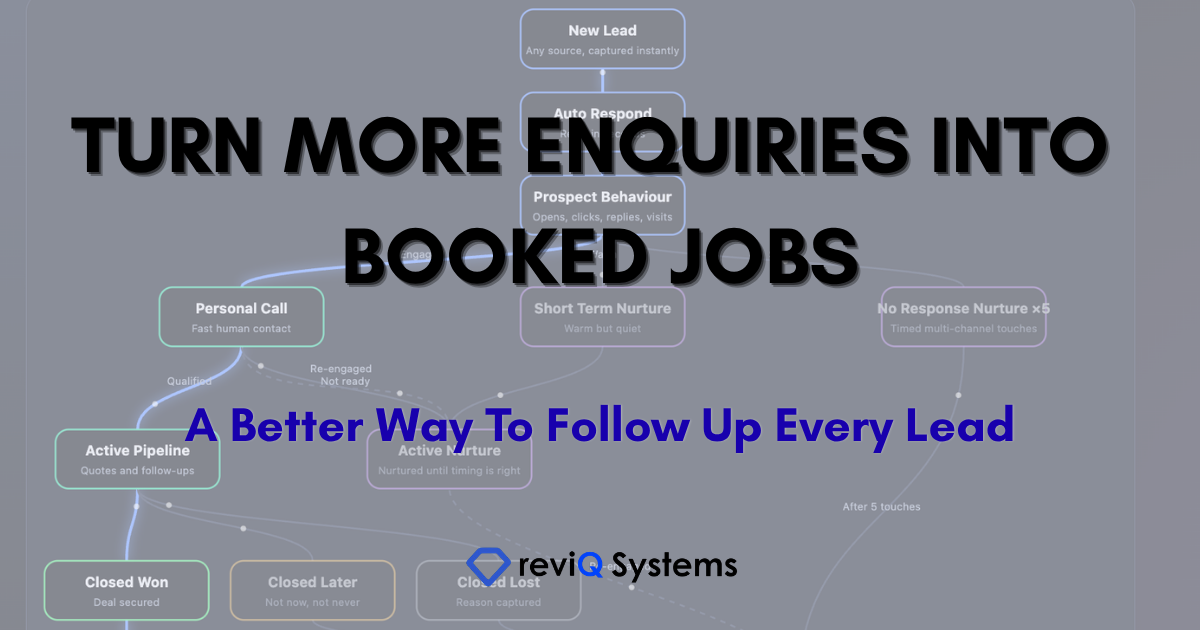
A better lead follow-up process gives every enquiry a next step – from the first response through to the quote, the booked job and the next time that customer needs you.
Here’s what that can look like in a trade or service business.
Start With a Response, Even When You’re on the Tools
A customer might find you through your website, an ad, a referral or a phone call. Wherever they come from, their details need to land somewhere your team can find them.
That means recording the enquiry in your CRM, assigning someone to follow it up and acknowledging that it’s been received.
An automated response can let the customer know what happens next while your team is busy.
Keep it useful. Confirm their enquiry, set a realistic expectation for a response and explain how to contact you if the matter is urgent. Only promise response times your team can deliver.
Give Different Leads Different Next Steps
Some customers want the job booked this week. Others are comparing quotes or planning work for next year.
Sending everyone through the same follow-up sequence can miss those differences.
Your process should make room for three common situations:
- Hot leads: ready to talk, asking questions or looking to book.
- Warm leads: interested, but still working through timing, budget or options.
- Quiet leads: haven’t responded, leaving you unsure where things stand.
Replies and direct conversations give your team the clearest information. Website visits, clicks and other engagement can provide extra context where tracking is available, but they don’t tell the whole story.
Hot Leads Need Someone to Pick Up the Conversation
When someone asks about availability or wants to discuss the quote, make sure the right person knows.
That might mean assigning a call, creating a task or moving the opportunity into an active sales pipeline.
The team member following up should be able to see:
- What the customer asked for.
- Which quote or options they received.
- Previous calls, emails and messages.
- What needs to happen next.
Automation can organise the handover. Your team still needs to answer the questions and help the customer make a decision.
Warm Leads Need a Reason to Stay in Touch
“Not yet” can be useful information.
Perhaps the customer is waiting for renovations to start, sorting out finance or deciding between different systems.
Record the reason and agree on a sensible follow-up date. Where appropriate, send information that helps them move forward: an explanation of the options, answers to common questions or a reminder before their quote expires.
When they respond, bring the conversation back to the team. Pause the automated reminders so they aren’t receiving a generic follow-up while someone is already helping them.
Quiet Leads Need a Follow-Up Plan
An unanswered quote can easily disappear into the pile.
A planned sequence gives your team a consistent way to check whether the customer still needs help. That could include an email, an SMS where appropriate and a call for opportunities that warrant a conversation.
Every message should have a purpose. Ask whether they have questions, whether the timing has changed or whether they’ve decided not to proceed.
Set a limit on the sequence. If there’s still no response, record the outcome and decide whether any later contact is appropriate. Respect opt-outs and contact preferences throughout.
Keep “Not Now” Separate From “No”
A customer delaying a project is in a different position from someone who has chosen another supplier.
Recording that difference helps you decide what to do next.
A delayed job might need a follow-up in three months. A lost quote might reveal a pricing issue, an unavailable product or a gap in how the options were explained.
Useful records give your team somewhere to start when they revisit an opportunity.
Winning the Job Is Another Handover
Once a quote is accepted, the sales follow-up should stop and the delivery process should begin.
Make sure the people booking and completing the job have the agreed scope, customer details and any promises made during the sale.
After completion, there may be a suitable opportunity to request a review, explain maintenance requirements or stay in touch about future work.
That’s how a lead-flow process connects to the whole customer relationship.
Does Every Enquiry in Your Business Have a Next Step?
Start with your current list.
Can you see who needs a call, who is waiting on a quote, who asked you to check back later and who has been sitting untouched?
At reviQ, we help trade and service businesses connect their software, organise their sales pipelines and build follow-up processes their teams can use.
If keeping track of every enquiry still depends on your memory, let’s talk about getting a better process in place.